When AI Becomes a Minister
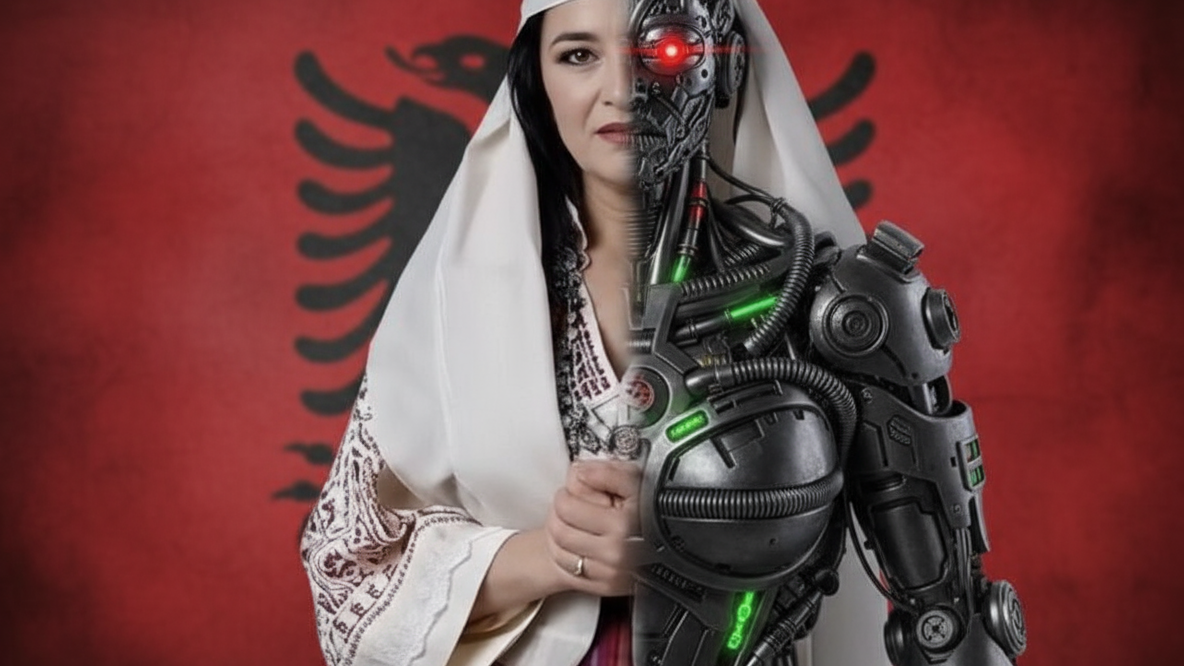
Why Albania's Bold Experiment Threatens Democratic Accountability
Albania just made history by appointing the world's first AI "minister" to oversee government procurement. As someone who's worked extensively in Albania supporting organizational transformation, particularly justice reform, this development demands urgent attention from everyone concerned about the future of democratic governance.
The Promise and the Problem
Prime Minister Edi Rama introduced "Diella" (meaning "sun" in Albanian) as a cabinet member [1] tasked with making public tenders "100% corruption-free." The AI system, which began as a virtual assistant helping citizens navigate government services, will now oversee procurement decisions, potentially affecting millions in public spending [2].
The anti-corruption goal is admirable. Albania has worked hard to strengthen democratic institutions, particularly as part of its EU accession efforts by 2030. But this appointment, however well-intentioned, risks undermining the very progress the country has achieved.
Why This Crosses a Critical Line
At Common Ground, we've established clear principles for AI deployment: we never allow automated systems to make decisions affecting people's livelihoods or organizational futures without human oversight. Here's why Albania's move violates these essential safeguards:
🔴 The Accountability Void: When an AI makes governmental decisions, who answers to citizens? Political leaders can point to the algorithm. Developers can claim they just built the tool. There's no one to question in parliament, no official to investigate, no minister to hold accountable at the ballot box.
🔴 Security Vulnerabilities: What happens when bad actors target the system? Cybersecurity breaches could shift corruption into the technical shadows, making it even less visible to public scrutiny.
🔴 Democratic Disruption: EU accession requires strengthening democratic institutions, not bypassing them. How can Albania demonstrate institutional accountability when key decisions are made by systems that can't testify, can't be questioned, and can't be voted out?
The Citizens Know Better
Tellingly, Albanians themselves are skeptical. "Even Diella will be corrupted in Albania," one citizen commented on social media. This local wisdom reflects a truth that Silicon Valley sometimes misses: corruption is fundamentally a human and institutional challenge that can't be debugged like faulty code.
The fact that Diella is portrayed as a woman in traditional Albanian dress—an attempt to make the technology seem familiar and trustworthy—only underscores the democratic theater at play here.
A Better Path Forward
AI absolutely has a role in fighting corruption. But that role should be:
-
Detection: Identifying suspicious patterns in procurement data
-
Analysis: Auditing for bias and irregularities
-
Optimization: Streamlining processes while maintaining human oversight.
-
Transparency: Making government operations more visible to citizens.
The technology should amplify human judgment, not replace it. It should strengthen democratic institutions, not circumvent them.
The Stakes for All of Us
Albania's experiment matters beyond its borders. As governments worldwide grapple with AI integration, this sets a concerning precedent. If we accept AI ministers today, what's next? AI judges? AI legislators?
An unbridled embrace of technological solutions for solving governance challenges risks eroding the very foundations of democratic accountability. Yes, humans are flawed. Yes, corruption is real. But the answer isn't to remove humans from democracy—it's to empower citizens with better tools, stronger institutions, and clearer accountability.
The Bottom Line
Albania has made genuine progress in building transparent governance structures. This AI appointment, even if implemented gradually, represents a step backward. Technology can be a powerful ally against corruption, but only when it operates within democratic frameworks, not instead of them.
The sun may shine brightly, but democracy requires the messy, imperfect, essentially human work of governing together. No algorithm, however sophisticated, can replace that fundamental truth.
What's your view on AI in government decision-making? Where should we draw the line between automation and accountability?
#AI #Democracy #Governance #Albania #PublicPolicy #DigitalTransformation #Ethics #Technology #Leadership #Corruption
-
Deilla was announced as a Cabinet member, but legal experts say the official status is unclear.
-
The government hasn't clarified whether Diella will make autonomous decisions or provide recommendations with human final approval.