This Video Made Parents Cry. The Research Says That's Not Enough.
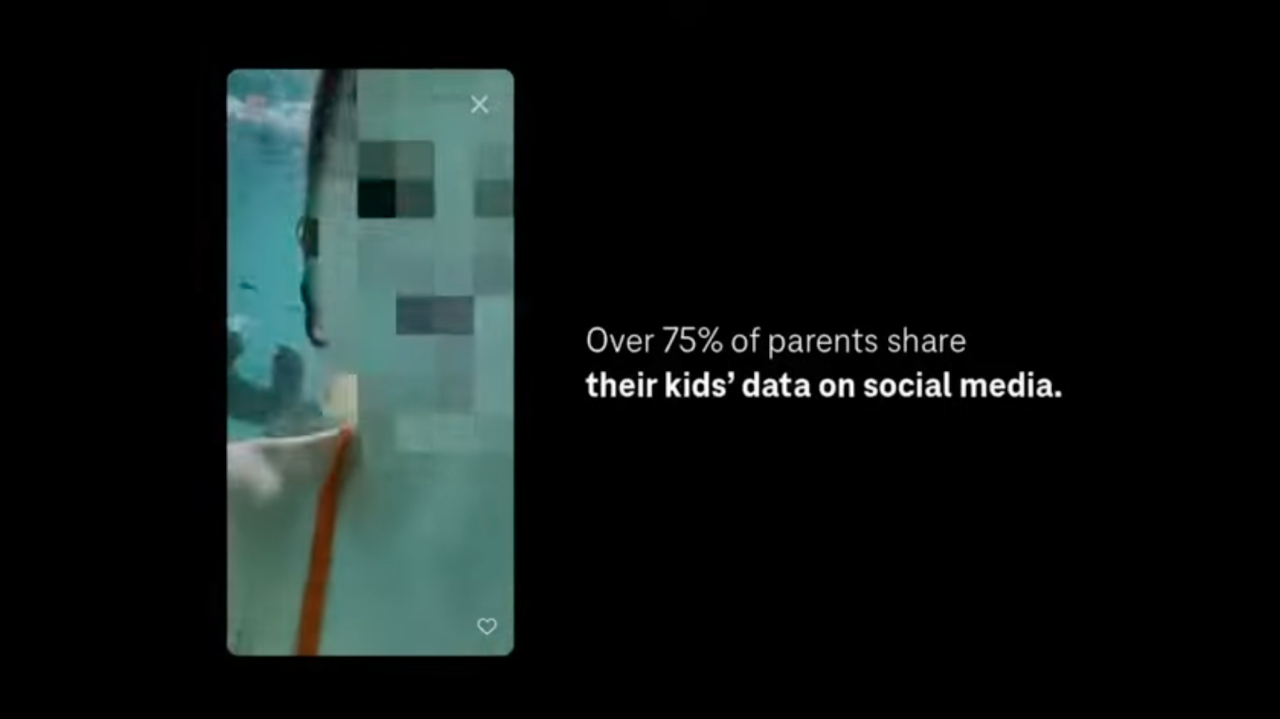
This video will make you feel something. That's not the same as making you do something different.
Deutsche Telekom's "Message from Ella" campaign has been shared widely in prevention and child safety circles since its release. It won a Cannes Lions Grand Prix. It's been called groundbreaking, a wake-up call, a must-watch for every parent.
I've watched it several times now. And I keep coming back to the same question: Does it work?
Not "does it win awards" or "does it get shared" or "does it make people emotional." Does it actually change behavior?
I don't think it does. And the research on fear appeals tells us why.
What the Video Does
For those who haven't seen it, here's the setup.
Parents are invited to a screening, ostensibly for a film about data privacy. They sit in a dark theater. On screen, a young woman appears, sitting alone in a stark room. She introduces herself as Ella. She's 9 years old.
The audience is confused. She's clearly an adult.
Then she explains. Using just one photo and AI, Deutsche Telekom created a grown-up version of a real 9-year-old girl. This digital Ella proceeds to confront her parents, who are sitting in that theater, about what they've been doing with her data. The photos they've posted. The information they've shared. The digital footprint they've created for her without her consent.
She describes how her voice could be cloned, how her image could be manipulated, how her identity could be stolen or exploited. The scenarios escalate. The parents in the theater grow visibly distressed. Some tear up. Some cover their mouths.
The video ends with text on screen: "Our children's data needs special protection." Then a URL.
It's beautifully produced. The performances are genuine. The emotional arc is devastating.
It's also a fear appeal missing nearly everything that makes fear appeals actually work.
What the Evidence Says
Here's where it gets interesting. When it comes to adults, fear appeals aren't universally ineffective. The largest meta-analysis on the topic, published in Psychological Bulletin in 2015, examined 127 studies with over 27,000 participants. The conclusion? Fear appeals generally do influence attitudes, intentions, and behaviors. There are few circumstances where they fail entirely, and almost none where they backfire. Again, with adults.
The research is different when it comes to young people. With youth, fear campaigns mostly fail.
So why am I skeptical of this video?
Because the research is equally clear about what makes fear appeals effective. They work better when the message includes efficacy statements, meaning they tell the audience not just what to fear but what to do about it and why that action will help. They work better when they recommend one-time behaviors rather than repeated ones. And critically, the combination of strong fear with low-efficacy messaging produces the worst outcomes: defensive responses, avoidance, resistance.
The Deutsche Telekom video delivers intense fear with almost no efficacy.
Watch to the end. The call to action is "Our children's data needs special protection." Then a website.
What should parents actually do differently tomorrow morning? Stop documenting their children's lives entirely? Delete their social media accounts? Use different platforms? Change specific privacy settings? Have a conversation with their kids about consent? The video doesn't say.
Fear without a clear path forward is just anxiety.
What Fear Done Right Looks Like
Want to see a fear appeal that actually works? Look at the CDC's Tips From Former Smokers campaign.
The ads are brutal. Real people with tracheostomies. Amputees. Stroke survivors. The emotional intensity rivals anything Deutsche Telekom produced.
But here's the difference: every ad ends with 1-800-QUIT-NOW. A specific, actionable, memorable call to action. When you call, you get free nicotine replacement products and counseling. The CDC tracks who calls, who stays engaged, who quits.
The results? From 2012 to 2018, the campaign generated an estimated 16 million quit attempts and over one million sustained quits. It drove 2.1 million additional calls to the quitline. It prevented an estimated 129,000 early deaths and saved $7.3 billion in healthcare costs.
That's fear working. Fear paired with efficacy. Fear that tells you exactly what to do next and gives you the resources to do it.
The Deutsche Telekom video offers none of this. It scares parents in a dark theater, captures their distress for a commercial, then sends them to a website with vague guidance. The research predicts exactly what happens next: some will feel motivated briefly, many will feel anxious and avoidant, and almost no one will change their behavior in any durable way.
Prevention Is Bigger Than Substances
Some readers might be wondering why someone whose clients largely work in substance use prevention is writing about a digital safety video.
Here's why: prevention science is prevention science. The mechanisms that make fear appeals effective or ineffective don't care what behavior you're trying to change. The research on efficacy statements applies whether you're trying to get someone to quit smoking or to think twice before posting their kid's photo.
The Commonwealth Prevention Alliance has been talking a lot lately about "reimagining prevention." For decades, the field focused primarily on reducing substance misuse among adults. That work continues. But the principles we've developed, the evidence base we've built, the hard lessons we've learned about what works and what doesn't, all of that applies far beyond drugs and alcohol.
I say "we" intentionally. Common Ground Consulting has partnered with CPA for more than a decade, and that relationship has deepened significantly over the past six years. I helped develop CPA's recent proposal to OpenAI's People-First AI Fund, which was selected as one of 208 grantees from nearly 3,000 applicants. The project, "Reimagining Prevention in the Age of AI," treats AI literacy as a protective factor, the same way prevention science has long approached substance misuse and mental health.
That's not a pivot away from prevention. It's prevention doing what it's supposed to do: evolving to meet the threats young people actually face.
Digital safety. Online exploitation. AI-generated harms. Screen time. Cyberbullying. These are prevention challenges. And they deserve the same rigor we'd apply to any other prevention challenge.
That means asking uncomfortable questions about popular approaches. It means holding awareness campaigns accountable for actual outcomes. It means refusing to let emotional resonance substitute for evidence.
If the prevention field is going to expand into these new domains, and I believe we should, we need to bring our standards with us.
The Trauma Question
There's another issue that this campaign seems to ignore.
Fear appeals can be trauma triggers. We don't know the experiences of everyone in our audience. A parent who has had their child's image exploited. A survivor of identity theft. Someone who has experienced online harassment or stalking. Someone who lost a child and now only has photos to hold onto.
When we deploy shock and emotional devastation as tools, we risk doing real harm to real people. With our obligation to do no harm, this risk matters.
Deutsche Telekom put unsuspecting parents in a dark theater and confronted them with an AI-generated vision of their child describing how her life could be ruined. They captured their authentic reactions of distress for a commercial.
That's a choice. And it's worth asking whether it was the right one.
You can watch the full video below. A note: it's emotionally intense and involves an AI-generated depiction of a child describing potential exploitation scenarios. If that's likely to land hard for you, the description above covers what you need to engage with the argument.
What Would Actually Work?
Here's where I want to flip from critic to probem-solver. Because the issue is real. Parents do overshare. Children's digital footprints do create risks. AI is making image manipulation trivially easy. This is a legitimate prevention challenge.
The evidence points us toward different approaches.
Positive messaging works better than fear alone. Instead of showing parents the nightmare scenario, show them what they're protecting by making different choices. Frame the gains, not just the losses. "Here's how you give your child the gift of choosing their own digital identity" lands differently than "here's how you're destroying your child's future."
Efficacy statements are essential. Don't just scare people. Tell them what to do, and tell them it will help. The CDC doesn't just show a man with a tracheostomy. They show him and then say: call this number, get free help, it works.
Achievable alternatives must be spelled out. Don't just tell parents to be careful. Show them exactly how to audit their privacy settings on each platform. Give them a script for talking to grandparents who post without asking. Provide a simple checklist for what to consider before posting a photo. Make the right choice the easy choice.
Skill-building beats awareness. A parent who watches the Ella video might feel scared for an hour. A parent who practices having a "digital consent" conversation with their child has a new capability they'll use for years.
Sustained engagement outperforms one-time shock. One video, no matter how powerful, will not change ingrained behavior. Prevention works when messages are reinforced across multiple touchpoints over time. A campaign, not a commercial.
Imagine what Deutsche Telekom could have built with the same budget and creative talent. A tool that scans your social accounts and shows you what's publicly visible about your child. A series of short videos modeling healthy conversations between parents and kids about online sharing. A partnership with schools to build digital literacy into the curriculum. A pledge program that creates social accountability.
Those are harder to make go viral. They don't win Grand Prix awards. But they do change behavior.
Prevention vs. Marketing: Different Games
Here's where I want to be fair to Deutsche Telekom. They're not a prevention organization. They're a telecom company. They made a piece of branded content that went viral, generated enormous press coverage, won major awards, and associated their brand with child safety.
By those metrics, it succeeded spectacularly.
But when prevention professionals share this video uncritically, when we praise it as an example of powerful awareness work, we're applying our credibility to an approach that's missing the elements research says matter most. We're conflating brand awareness with behavior change. We're letting emotional impact stand in for actual impact.
I understand why it happens. We're starved for attention to the issues we care about. When something breaks through the noise, we want to celebrate it. We want to believe that if enough people feel something, change will follow.
But feeling isn't doing. And we know that.
The AI Paradox
There's a layer to this campaign that deserves its own examination.
Deutsche Telekom demonstrated exactly how easy it is to create a convincing deepfake of a child using AI. They showed the code running. They showed the face being generated. They proved the threat is real by executing it.
Is that a feature or a bug of this approach?
On one hand, it makes the threat concrete rather than abstract. You can't dismiss it as hypothetical when you're watching it happen.
On the other hand, they did the thing they're warning about. They took a real child's photo and used AI to manipulate it, then broadcast that manipulation to millions of people. The parents consented, presumably. But it's a bit like running an anti-drunk-driving campaign by actually driving drunk through a crowded street and hoping nobody gets hurt.
There's also a timing issue. This campaign is from 2023. The AI tools have only gotten more powerful and more accessible since then. What worked as a shocking demonstration three years ago is now something a teenager could do on their phone in ten minutes. When the scary thing becomes ordinary, where does that leave fear-based approaches?
A Challenge to the Field
The prevention field is facing a choice.
We can keep applauding creative executions that feel impactful in the moment. We can share videos that make us cry and assume that tears translate to behavior change. We can celebrate awareness and hope it's enough.
Or we can hold ourselves and our partners to the evidence we've spent decades building.
This isn't about being killjoys who can't appreciate powerful storytelling. I appreciate this video. It's genuinely well made. The concept is clever. The execution is polished. It moved me the first time I watched it.
But being moved isn't the goal. The goal is protecting children. And if a fear appeal is missing the elements that make fear appeals work, if it delivers anxiety without efficacy, then we need to say so. Even when the video wins awards. Even when everyone else is praising it.
It's effective at one thing: making you feel something fast.
But, the question isn't whether this video makes you feel something. It's whether it makes anyone do something different, six months from now, when the feeling has faded and the next scary thing has come along.
If you work in prevention, I'd genuinely like to know: Am I being too hard on this? Is there something about digital safety that changes the calculus? Does fear work differently when we're talking to adults about their children?
Or is this a moment for our field to take the lead in this new domain?
Thanks to Jeff Hanley at the Commonwealth Prevention Alliance for his insights.